g

9 minutes
Initially there is you the home buyer, the mortgage broker who you choose and the lender. In the background there is the underwriter - they act for the lender to check your application and ensure that giving you a mortgage is not too risky for them. You will often find a mortgage broker using a mortgage comparison site - fill in your basic details and you will see what you can afford. The phrase 'Whole of market advice' describes comparison sites and brokers that offer a large range of mortgages. When you find a property and proceed to buy, an estate agent and solicitor or conveyancer will be involved. To read up on mortgage brokers see Get a Mortgage Quote - Choosing the right mortgage broker.
There are two mortgage 'stages' - the Mortgage Agreement In Principle and The Mortgage Offer made by the lender.
Before you make a house offer most agents want an Agreement in Principle (AIP) sometimes called a Decision in Principle. A quick underwriting check using summary information about you and a credit search is done before an AIP is given. To get one you’ll still need basics: ID, address history, income details and a view of your deposit. Keep the figures consistent when you later submit the full application - mysterious increases in income or last-minute debts are how AIPs turn into awkward declines.
An AIP is NOT a mortgage offer - it's a 'Mortgage offer in Principle' and is an indication of what size of mortgage you can apply for provided all the information supplied by you is accurate and circumstances such as interest rates do not change. It allows you to start looking for a home confident that you will be offered a mortgage deal.
This is the 'product' offered by the lender to you of a home loan to buy the house you want. Mortgage deals vary with different interest rates and lenders' LTVs (loan to value ratio) for a particular mortgage product. LTVs are shown as a percentage - eg 70%LTV - 70% LTV on a £300,000 house is 0.7*300,000=£210,000. That is the maximum that the lender will offer under that deal. Your deposit is 30% (100% of house price minus the 70% mortgage).
The offer is after detailed assessment of your completed mortgage application form which determines your affordability - how much you can pay monthly with your deposit. The actual mortgage offered to you will be the lower of your affordability and the lenders LTV. So for example, you might have a deposit for 30% of a house that you want which leaves a need for a mortgage of 70% of the house value. Your affordability must be high enough for a 70%LTV mortgage. Different lenders have different lending policies and offers but procedures are much the same. Your credit history, the property, flood risks and overall risks are checked.
A mortgage offer is given after the lender has viewed the house ('Valuation survey'). The Offer is based on their valuation and not the sellers price.
Don't forget to budget for other costs such as your brokers' arrangement fee, the valuation survey if the lender charges, surveys and insurance. Some costs can be added to ('rolled into') your mortgage but this means you will be paying interest on these costs.
Lenders tend to ask for the same core bundle of documents to check who you are, where your money comes from and whether the house is mortgageable. Here’s a clear walkthrough of what you’ll need, why they want it and how to avoid last-minute mistakes. Take time and you will get that vital mortgage confirmation letter.
The paperwork needed for your mortgage after filling in the mortgage application form is simply evidence for those answers dressed up in compliance and anti money laundering laws. Once you see it that way, the list makes sense and gets much easier to organise.
You’ll be asked for a valid passport or a photocard driving licence. The name must match your application exactly. If your ID is out of date, renew it before you apply. If you’ve changed your name, bring the deed poll or marriage certificate. Keep scans clear, colour and full page.
Non-UK nationals will be asked for proof of residency status such as a share code for the online system visa documentation settled or pre-settled status confirmation. Some lenders require a minimum time in the UK (6 months) and a UK bank account with salary credits. The lender needs to see proof that the income is stable and traceable.
The type of visa (entrepreneur, higher income or skilled worker for example) may influence the lender also as it can be an indication of future earnings.
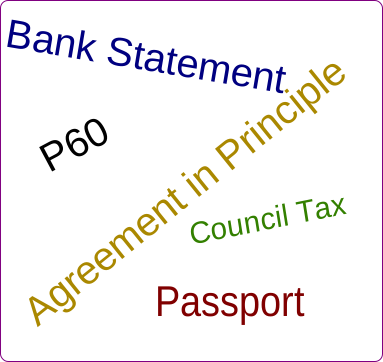
Lenders usually want recent proof of your current address such as a council tax statement, utility bill or bank statement from the past three months. Online statements are fine if they show your name address and date. Gym memberships and Amazon parcels emails don’t count. Expect to list your addresses for the last three years; electoral roll registration helps your credit file.
If you’re employed most lenders ask for your last three monthly payslips and your latest P60. Bonuses overtime or commissions you want counted need to appear consistently - ideally across the slips and if annual on your P60 or a letter from your employer. If you recently changed jobs, offer your contract and first payslip when it arrives. If on probation in a new job, some lenders are fine others less so - be ready with the contract to prove terms and start date.
Self-employed or running your own limited company? Expect two (sometimes three) years of SA302s and corresponding HMRC tax year overviews. Company directors are often asked for signed accounts and evidence of dividends or salary. Lenders can use an average over years or the lower year. An accountants forecast of earnings (perhaps due to new contracts) can be helpful as can an accountants reference.
Anything that looks irregular may be ignored unless you can prove it’s a stable source - for example, overtime earnings may only occur at Christmas.
Child benefit maintenance, rental income, shift allowances, disability benefits, lodger income - lenders treat these differently. If you want them included gather the paperwork: award letters court orders signed tenancy agreements or bank statements showing regular credits. Predictability is what counts.
Three to six months of statements for every current account you use. Lenders look for your salary landing regular bills going out and whether your lifestyle leaves space for repayments. It’s not about judging takeaways; it’s about patterns - persistent overdrafts, gambling transactions, missed payments. Check the PDFs before sending: your name, account number and the statement period should be visible on each page.
Where did the deposit come from? Lenders and conveyancers must verify it to comply with anti-money-laundering rules. Savings built up over time: provide statements showing the balance growing. Big lump sum: show the trail - from the matured ISA or bonus letter to the account it landed in. Inheritance: provide the grant of probate or solicitor’s letter. Sold a car? Keep the sale invoice and matching bank credit.
If someone is gifting you money you’ll need a gifted deposit letter also known as a 'Deed of Gift'. It states the amount, that it’s a non-repayable gift with no beneficial interest in the property and includes the donor’s full details. The donor will also be asked for ID and bank statements proving the origin of funds. If it’s a loan declare it; some lenders will allow it with an affordability check.
It should include:

There are a few credit rating companies who may well give your different scores - ask them for you 'statutory credit report'. Lenders run their own checks but pulling your full statutory credit report before applying helps you fix errors and prepare explanations. Old addresses mixed up? Electoral roll missing? Dispute a mistake early.
If you’ve had past blips - late phone bill default or a satisfied CCJ - document dates, amounts and settlement proof. A short note that shows a one-off issue is resolved can steady an application that might otherwise be refused.
Student loans car finance personal loans buy now pay later - the lot. Lenders will see most of it anyway. Provide statements or agreements and be precise about balances and monthly payments. If you plan to clear a card to improve affordability do it and show the zero balance on a statement; 'I’ll clear it late' won’t be factored in. Likewise childcare costs aren’t optional in a lender’s eyes - expect to evidence them if asked.
If you’re using a government or housing association scheme - shared ownership, First Homes or a legacy Help to Buy equity loan - you’ll need the scheme offer or eligibility documents alongside your mortgage papers. Expect additional forms confirming your share rent level and staircasing rules. Lenders like certainty; the clearer the scheme paperwork the smoother the underwriter’s day (and yours).

If a parent is going on the application (as a guarantor or joint borrower) they’ll be underwritten too - ID income evidence and credit checks included. Some products use 'joint borrower sole proprietor' structures so Stamp Duty or future tax issues don’t get messy; these are paperwork-heavy but can unlock affordability. Get everyone aligned on who’s providing what and when.
Most lenders accept PDFs and clear phone photos. Take photos in good light flat with all corners visible. Name files sensibly - '2025-06-P60-John Browne.pdf' is clearer than 'IMG_4473.jpg'. Combine multi-page statements into one PDF; avoid sending many single images that arrive out of order. If you’re asked to e-sign forms check your name and address spelling before you click.
A typical flow goes like this. Mortgage broker or lender collects ID address history payslips or SA302s bank statements and deposit evidence to submit your application. While underwriting happens your conveyancer starts ID checks again (yes again) and asks for source-of-funds documents too. The lender orders a valuation; if the property is leasehold the seller’s solicitor orders the management pack. Near offer you may be asked for updated statements if time has passed. On offer your lender issues an illustration and a formal mortgage offer.
Unexplained large credits into your account - fix by adding a short note and proof. Cash deposits - avoid if you can; otherwise show the source. New credit just before applying - resist; it changes affordability. Name mismatches - keep ID bank and payslips aligned. Payday loans in the last year - some lenders say no; a broker can steer you elsewhere.
Frequent gambling - occasional fun is fine but if statements look like a slot machine expect questions. Finally never 'close down' accounts mid-process - wait until after completion; lenders sometimes re-verify. Read Mortgages - red flags on how to avoid major problems.
Zero-hours contracts fixed-term roles returning from parental leave newly self-employed multiple jobs - none of these are automatic barriers but they do require clearer evidence. Letters from employers confirming hours return dates and salary along with consistent credits on statements help. Newly self-employed borrowers with less than two years of accounts have options with a narrower set of lenders; you’ll lean on contracts projections from a qualified accountant and healthy business bank statements.
Rather than a lecture about avocado toast affordability checks, use your documents to model income after tax essential commitments and a stress-tested mortgage payment at a higher interest rate. This is why consistency matters: the payslip should match the bank credit; the childcare outgoings on your application should match your statements. When things don’t line up underwriters ask for clarifications - not because they’re suspicious but because regulation requires it.
New-build purchases require a warranty certificate (NHBC or similar) confirmation the property meets lender new-build criteria and sometimes proof that incentives (like free flooring) aren’t artificially inflating the price. Your conveyancer will also want planning and building control documents. Again the developer’s sales team should supply most of this but don’t assume they will without a nudge.
For the mortgage valuation and the legal checks expect questions about the property itself. Freehold houses are usually straightforward. Leasehold homes are document-heavy: the lease management pack, any service charge statements, ground rent details and any other charges. Lenders now take a dim view of escalating ground rents or charges. You don’t have to assemble all this yourself but knowing it exists (and chasing the seller’s solicitor early) saves weeks.
There are specialist lenders for homes that are of 'non-standard construction' such as built with a timber frame or with a thatched roof.
Lenders will require buildings insurance from exchange of contracts. (Insurance - protecting your home) You won’t usually be asked for proof until later but get a quote ready with the correct address, rebuild cost and start date. If you’re taking life or income protection keep the policy schedule; it’s useful for your records and sometimes requested by cautious conveyancers.
Create a folder named for your purchase. Subfolders: ID Address, Income, Bank, Deposit, Property. Save everything as PDFs with sensible names. Add a one-page 'notes' document summarising anything unusual - career break, dates why savings jumped after a car sale etc. You’re not writing a memoir - you’re giving an underwriter the answer before they think of the question.
Life happens. If you change jobs, get a pay rise, clear a loan or receive a new gift during underwriting tell your broker or lender immediately and supply updated documents. The temptation to 'keep quiet to avoid rocking the boat' can backfire; undisclosed changes discovered later can void an offer. Declared early they’re usually fine - and sometimes improve your terms.
Separate from the lender, your conveyancer runs anti-money-laundering checks, verifies your ID, reviews the contract pack and raises enquiries. Expect to send them the same passport proof of address and source-of-funds trail you sent the lender. If your deposit is arriving from multiple places tell them early and provide statements for each. Conveyancers love clarity.
On completion keep a digital pack: mortgage offer, key correspondence, final completion statement, insurance schedule, warranty certificates (if new build) and the property’s manuals or guarantees. File your credit report again a couple of months later to check the mortgage is recorded correctly and any old addresses are updated.
Start with identity (passport or licence) and address proof (council tax utility or bank statement). Gather three months of bank statements three payslips and your P60 - or SA302s and overviews if self-employed. Create a clear deposit trail; if gifted get a proper gift letter and the donor’s evidence. Pull your credit report and fix errors. If leasehold ask the seller early for the management pack. If on a scheme line up the scheme documents. Keep everything in named PDFs and be ready to resend calmly!
Paperwork can feel like an audit of yourself. It isn’t. It’s a checklist to unlock a home. If you treat it as a task to do you’ll glide through what trips most first-time buyers: mismatched names, unexplained credits and that missing page.

See where the mortgage fits in the overall stages of buying a house at First Time Home Buyer homebuying process step by step and learn about how to decide what you really want in a house Home Buyers Wants and Needs List.
Your house viewing and home inspection is covered at House viewing checklist for buyers - What is a house buyers inspection? and .
House surveys and why you should have them carried are detailed at Buying a house without an inspection survey and What are the different types of house buyers survey?.
Bookmark the site and read the articles at your speed!
last updated March 20th, 2026